The Osmotic Ledger: Tea, Thirst and the Cellular Bookkeeping of Water
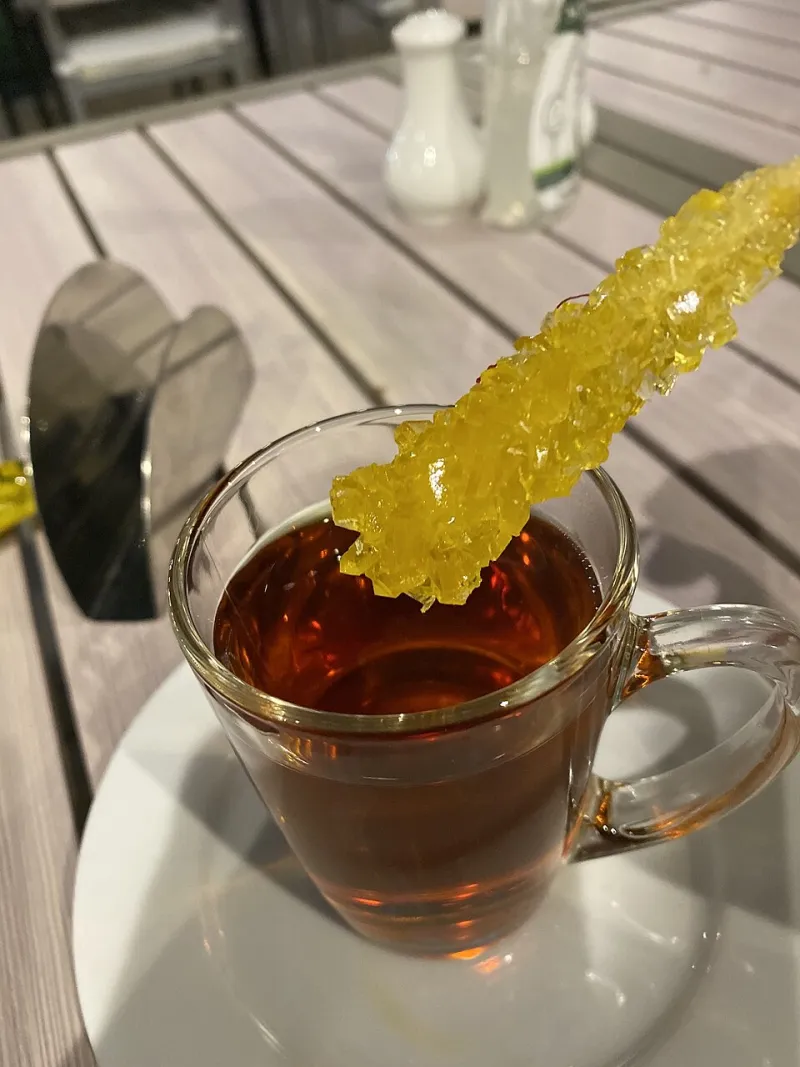
Photo: Slywire, CC BY-SA 4.0, via Wikimedia Commons
In a British workplace, the kettle is not merely a appliance. It is a repeated physiological experiment. Each mug adds water, caffeine and a modest solute load to a system that must keep plasma osmolality within a narrow range. The tea break therefore offers an unusually familiar route into one of biology's most elegant feedback loops: the control of water balance by vasopressin and aquaporin channels.
The sensor: osmoreceptors in the hypothalamus
Water balance begins with detection. Specialised neurons in the hypothalamus, particularly around the supraoptic and paraventricular nuclei and the circumventricular organs, act as osmoreceptors. They monitor the effective concentration of solutes in the blood. When plasma becomes slightly more concentrated, these cells lose water and shrink. That mechanical change alters the activity of ion channels in their membranes and increases their firing rate.
The system is remarkably sensitive. A rise in plasma osmolality of only a few per cent is enough to trigger vasopressin release and thirst. The body does not need a dramatic dehydration event to respond; it reads small deviations and corrects them early. This is feedback control in its most practical form: a sensor, a signal and an effector, all aimed at keeping the internal environment stable.
The signal: vasopressin as a circulating peptide
Vasopressin, also known as antidiuretic hormone, is a short peptide released from the posterior pituitary into the bloodstream. Its half-life is brief, measured in minutes, which allows the system to adjust quickly. The hormone travels to the kidney and binds to V2 receptors on the basolateral membrane of principal cells in the collecting duct.
V2 is a G-protein-coupled receptor. Its activation stimulates Gs, which in turn activates adenylyl cyclase. The resulting rise in cyclic AMP activates protein kinase A. This is a familiar signalling cassette, but its output here is not a change in heart rate or neurotransmitter release. It is a change in cellular traffic.
The traffic: aquaporin-2 shuttles into place
In the absence of vasopressin, collecting-duct cells are relatively impermeable to water. Aquaporin-2 channels are stored in intracellular vesicles. When protein kinase A is activated, it phosphorylates aquaporin-2 at a key serine residue, Ser256. This modification, together with changes in the actin cytoskeleton and the action of Rab and SNARE proteins, drives vesicles to the apical membrane. Aquaporin-2 channels are inserted into the cell surface.
Water can then move from the urine in the collecting duct into the principal cell, down an osmotic gradient. It exits on the other side through aquaporin-3 and aquaporin-4 channels in the basolateral membrane, returning to the blood. The result is concentrated urine and conserved water. When vasopressin levels fall, aquaporin-2 is internalised again, the apical membrane becomes less permeable, and urine becomes more dilute.
This is the essence of the tea-break lesson. The kidney is not a fixed filter. It is a dynamic signalling organ that remodels its own water permeability in response to a circulating peptide.
The tea test: hydration, caffeine and the myth of the dehydrating cuppa
Tea is overwhelmingly water. A typical mug contains more than 99 per cent water, with a modest amount of caffeine and other solutes. Caffeine is an adenosine receptor antagonist, and at high doses it can increase urine output through changes in renal blood flow and sodium handling. But the effect is small in ordinary tea-drinking ranges, and the water content of the drink more than offsets it.
Regular tea drinkers also develop tolerance to caffeine's mild diuretic action. The idea that a normal mug of tea dehydrates the body is therefore not supported by the physiology. Tea contributes to daily fluid intake. Very strong tea consumed in large quantities may have a modest diuretic effect, but it does not turn a routine tea break into a net loss of water.
The tea break also illustrates a broader principle: the body does not count cups. It counts particles, volume and osmotic gradients. A biscuit adds sodium and carbohydrate; a hot room adds sweat losses; a long meeting may delay thirst. The vasopressin system integrates these variables without conscious calculation.
When the ledger goes wrong
The clinical importance of this pathway becomes clear when it fails. In central diabetes insipidus, insufficient vasopressin release leads to excessive dilute urine and persistent thirst. In nephrogenic diabetes insipidus, the hormone is present but the kidney does not respond properly. In SIADH, excessive vasopressin activity causes water retention and low sodium concentrations in the blood.
Pharmacology has learned to intervene at the receptor. Desmopressin is a V2 agonist used in central diabetes insipidus, while vaptans such as tolvaptan are V2 antagonists used in selected conditions of water retention. These drugs are a reminder that G-protein-coupled receptors are not abstract diagrams. They are precise therapeutic handles on real physiological traffic.
A domestic lesson in homeostasis
The next time a mug of tea is poured, it can be read as a small exercise in cell signalling. Osmoreceptors detect the shift. Vasopressin carries the message. V2 receptors activate a cAMP cascade. Aquaporin-2 vesicles move into place. Water follows. The system then resets, ready for the next cup. For Cell Signalling Biology, the tea break is more than a ritual: it is a clear demonstration of how cells sense, signal and adjust to keep the whole organism in balance.