Second Brain, First Post: What Your Gut Microbes Are Actually Saying to Your Head
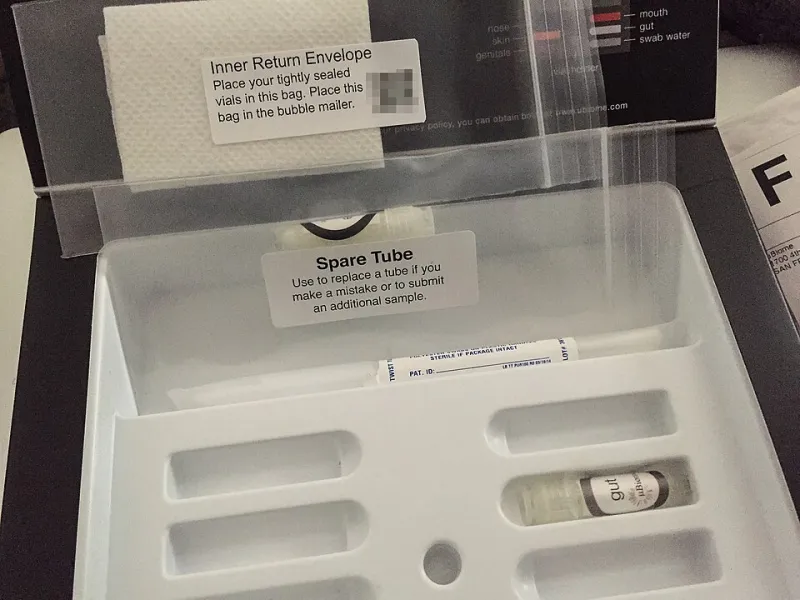
Photo: Tony Webster from San Francisco, California, CC BY 2.0, via Wikimedia Commons
Few areas of biology have attracted as much commercial enthusiasm — or as little regulatory scrutiny — as the gut microbiome. Walk down any high street supplement aisle in Britain and you will find products promising to 'support the gut-brain axis' with a confidence that the underlying literature rarely matches. Yet the core claim is sound: the trillions of microbes resident in the human intestine do produce molecules with genuine signalling activity, and some of those signals do reach the nervous system. The interesting question is not whether the conversation happens, but how loud it is.
The Chemistry of Fermentation
The gut bacteria's most well-characterised products are the short-chain fatty acids (SCFAs) — chiefly acetate, propionate and butyrate — generated when microbes ferment dietary fibre that our own enzymes cannot digest. Butyrate serves as the preferred fuel for the cells lining the colon and has well-documented anti-inflammatory effects on that tissue. But SCFAs also act as signalling molecules further afield: they bind to G-protein-coupled receptors on enteroendocrine cells and immune cells, prompting the release of hormones such as peptide YY and GLP-1, and influencing the permeability and immune tone of the gut barrier.
Whether butyrate itself crosses into the circulation in quantities sufficient to act directly on the brain is contested. Most of its central effects, where they occur, are likely indirect — mediated through the vagus nerve, the immune system, and hormonal messengers released from the gut wall.
The Vagus: A Data Cable with Direction
The vagus nerve, running from the brainstem to the abdomen, is often described as the physical link in the gut-brain conversation. It is a two-way line: roughly four-fifths of its fibres carry information upwards, from viscera to brain, which is why the gut is so well placed to report on its own chemical environment.
Vagal sensory neurons do not respond to microbes directly, but they do respond to what microbes induce the gut to release — serotonin from enterochromaffin cells, hormones, and inflammatory signals. Notably, rodent studies have shown that some probiotic effects on anxiety-like behaviour disappear entirely if the vagus nerve is cut, demonstrating that at least some microbial influence is genuinely neural rather than merely hormonal.
Tryptophan: The Precursor Pipeline
A second, more pharmacologically tractable route runs through tryptophan, the dietary amino acid from which the body synthesises serotonin. Gut bacteria compete with the host for available tryptophan and can shunt it down alternative metabolic pathways, altering how much reaches the bloodstream and, ultimately, the brain. Some bacterial species also produce GABA and other neurotransmitter-like molecules directly, though how much of this survives digestion and the blood-brain barrier remains an open question.
The pharmacological relevance is clear. Drugs that act on serotonergic signalling — from SSRIs to the migraine treatments that target 5-HT receptors — operate in a system whose raw material supply is partly under microbial management. This does not mean a probiotic is an antidepressant. It does mean the microbiome is a legitimate variable in how individuals respond to such medicines, and one that clinical pharmacology is only beginning to account for.
Weighing the Evidence
What, then, can be said with confidence? Human studies consistently associate greater dietary fibre diversity with markers of better mental health, though association is not mechanism. Randomised trials of specific probiotic strains have shown modest effects on mood measures in some studies, with null results in others; strain specificity matters enormously and is poorly communicated by retailers. The landmark work from groups such as the APC Microbiome Institute in Cork and the many UK university groups studying psychobiotics has established mechanisms in animals that remain difficult to verify in humans — a familiar gap in translational science.
For readers, the honest summary is this: the gut-brain axis is real biochemistry, not marketing fiction. But the signals involved are subtle modulators, not mood dials. A varied, fibre-rich diet — the kind recommended in the government's Eatwell Guide — remains the best-evidenced intervention, and considerably cheaper than the supplements aisle.