When the Alarm Cannot Be Silenced: Inside the Cytokine Storm
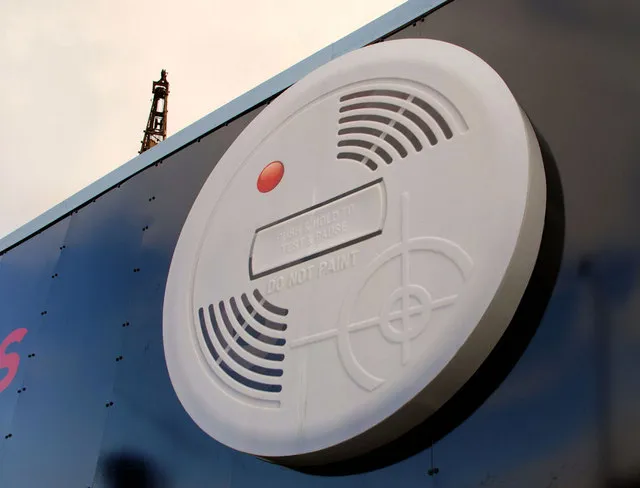
Photo: Albert Bridge, CC BY-SA 2.0, via Wikimedia Commons
Every British household knows the sound of a smoke alarm. It is deliberately unpleasant — a noise engineered to cut through sleep, television and conversation alike. The immune system has its own version, and it is called the cytokine spike.
Cytokines are small signalling proteins: interleukins, interferons, tumour necrosis factor and their many relatives. When a virus such as influenza enters the airways, infected cells release these messengers, and immune cells respond in kind. The result is a sharp, coordinated burst of chemical signalling — the molecular equivalent of that piercing alarm. Blood vessels dilate, temperature rises, and white blood cells pour into the tissue. We experience it as fever, aches and fatigue, but underneath, the signal is doing exactly what it was designed to do: recruit defenders and alert the wider body.
A Well-Designed Alarm Switches Itself Off
What makes the normal cytokine spike remarkable is not its onset but its restraint. Signalling pathways in the immune system are built with brakes built in. Anti-inflammatory cytokines such as interleukin-10 rise alongside their inflammatory counterparts. Receptors are internalised; cells become desensitised; negative feedback loops dampen the response once the threat begins to recede. The alarm rings, the household evacuates, the fire is dealt with — and then someone reaches up and silences the noise.
A cytokine storm, or hyperinflammation, is what happens when that switch fails. Rather than a spike that rises and falls, the signalling enters a positive-feedback loop. Pro-inflammatory cytokines stimulate immune cells to release more pro-inflammatory cytokines, which recruit further immune cells, which release more cytokines still. The alarm is no longer reporting a fire; in a meaningful sense, the alarm has become the fire.
Clinically, this escalation marks severe cases of influenza and, memorably, COVID-19. In the patients who deteriorated in the second week of infection during the pandemic, the virus itself was often declining — but the lungs were being destroyed by the response to it. Fluid flooded the alveoli, oxygen exchange collapsed, and multiple organs came under strain from circulating inflammatory signals. Pathologists examining damaged lung tissue frequently found the hallmarks of this friendly fire.
Why Some and Not Others
One of the stubborn questions of the pandemic was why two people of similar age and health could experience wildly different trajectories. Part of the answer lies in genetics and pre-existing conditions, but signalling biology offers a subtler picture. The magnitude of the initial viral load, the speed of the innate immune response, and individual variation in feedback regulators all shape whether the system settles or spirals. Research from UK groups, including work at the Francis Crick Institute and collaborations across the NHS during the pandemic, helped map these dynamics and identify which patients were tipping into hyperinflammation.
Age adds another layer. In older people, the immune system's early response can be blunted and dysregulated at once — a slower start followed by a coarser, less controlled escalation. It is one reason a routine winter infection can become dangerous for a grandparent while passing almost unnoticed through the rest of the household.
Fighting the Alarm, Not the Fire
Here lies the counterintuitive heart of treatment. Once a cytokine storm is established, antiviral drugs alone are of limited use; the pathogen may already be an afterthought. The clinical task becomes firefighting in a different sense — suppressing the body's own signalling.
The landmark evidence came from the RECOVERY trial, run by researchers at the University of Oxford. Among its findings was that dexamethasone, a cheap and widely available corticosteroid, reduced mortality in hospitalised COVID-19 patients requiring oxygen. Dexamethasone does not touch the virus. It broadly dampens inflammatory gene expression, turning down the volume of the alarm across many cytokine pathways at once.
More targeted agents followed the same logic. Tocilizumab, an antibody drug that blocks the interleukin-6 receptor, was trialled in the UK and incorporated into NHS guidance for the most severely ill patients. Interleukin-6 is a central hub in inflammatory signalling, and by cutting the wires to that hub, the drug interrupts one of the key feedback loops sustaining the storm.
There is a balance to strike, of course. Suppress immunity too far and the original infection gains ground, or secondary infections take hold. The art of modern critical care in these cases is titration: enough signal to clear the virus, not so much that the patient is harmed by the response.
Lessons Beyond the Pandemic
Cytokine storms are not unique to respiratory viruses. They complicate some cancer immunotherapies, graft-versus-host disease, and certain autoimmune conditions. The same principle applies throughout: in signalling biology, timing and termination matter as much as activation. A signal that cannot be switched off is not information any more — it is noise, and destructive noise at that.
For students of cell signalling, the cytokine storm is a defining case study in why feedback architecture is everything. The same molecules, the same receptors, the same cells — arranged in a loop rather than a spike, and a routine winter illness becomes a house fire. The alarm was never meant to work this way. Understanding precisely where the off-switch fails, and how to override it from the outside, remains one of the most consequential tasks in modern medicine.