Pilgrimages of the Penicillin Age: Where Britain Shaped the Science of Cell Signalling
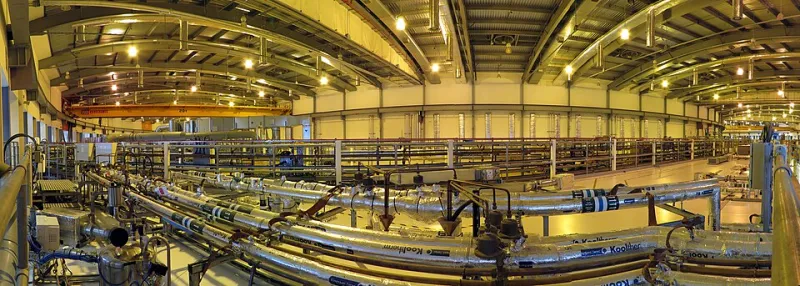
Photo: Prosthetic Head, CC BY-SA 4.0, via Wikimedia Commons
Cell signalling can seem an abstract discipline — phosphates, cascades and second messengers confined to lecture slides. Yet much of this science has distinctly British roots, and several of its milestones can be encountered in person, from museum galleries in London to working laboratories in Dundee. For students and enthusiasts alike, a signalling pilgrimage makes a rewarding journey.
1. The Second Messenger — Sutherland's Cyclic AMP
American biochemist Earl Sutherland earned the 1971 Nobel Prize for showing that hormones do not simply enter cells; they trigger internal messengers such as cyclic AMP. His work transformed how scientists conceived of communication within the body, and its consequences were felt strongly in Britain, where researchers at Cambridge and elsewhere extended second-messenger biology into our understanding of diabetes and hormonal disease. The framework Sutherland established still underpins the pharmacology of beta-blockers and bronchodilators prescribed across the NHS every day. Visitors to the Science Museum in London can trace the biochemical instrumentation of this era within its medicine galleries.
2. Deciphering Insulin — from Cambridge to the PDB
Frederick Sanger's determination of insulin's amino acid sequence at Cambridge, completed in the 1950s, earned him the first of two Nobel Prizes. Though a chemistry achievement, it made rational study of insulin receptor signalling possible — work that would later explain how this hormone instructs cells to absorb glucose, and why that instruction fails in type 2 diabetes. The legacy continues at the Wellcome Sanger Institute near Cambridge, which offers public engagement events and remains central to UK genomics.
3. Phosphorylation and the Code of the Cell
The realisation that proteins are switched on and off by the addition and removal of phosphate groups — work recognised by the 1992 Nobel Prize to Edmond Fischer and Edwin Krebs — found a fervent British champion at the University of Dundee. Philip Cohen's establishment of the MRC Protein Phosphorylation Unit in 1990 turned a Scottish city into a world capital of kinase biology. Dundee's School of Life Sciences continues to run public open days, and the city's Discovery Point museum, celebrating the RRS Discovery, makes an appropriately ambitious companion visit.
4. Kinase Drugs and the Fight Against Cancer
Understanding phosphorylation paved the way for kinase inhibitors — drugs designed to silence the overactive signalling that drives tumour growth. UK institutions played a substantial part in translating this science into medicines, with the Institute of Cancer Research in London and the Francis Crick Institute contributing to drug discovery programmes targeting aberrant growth-factor receptors. The Crick, situated beside St Pancras station, welcomes visitors to exhibitions and public lectures, making it perhaps the most accessible landmark on this list.
5. Structural Biology at Diamond
The newest landmark is not a discovery but a capability. Diamond Light Source, the national synchrotron near Oxford, allows researchers to visualise signalling proteins — including receptors targeted by a third of all new medicines — at atomic resolution. During the pandemic its beamlines were famously repurposed for COVID-19 drug screening. Public open days run several times a year and are booked out months in advance.
Where the Field Goes Next
UKRI-funded programmes are now pushing signalling research towards single-cell resolution and AI-guided drug design, with substantial investment in understanding how signalling networks fail in dementia and resistant cancers. The message from these five landmarks is consistent: Britain's contribution to cell signalling is not historical artefact but living infrastructure.
For anyone teaching or studying the subject, a visit to even one of these sites offers something no textbook can — the tangible sense that the molecules on your syllabus were, and are being, understood by people in rooms you can stand in.